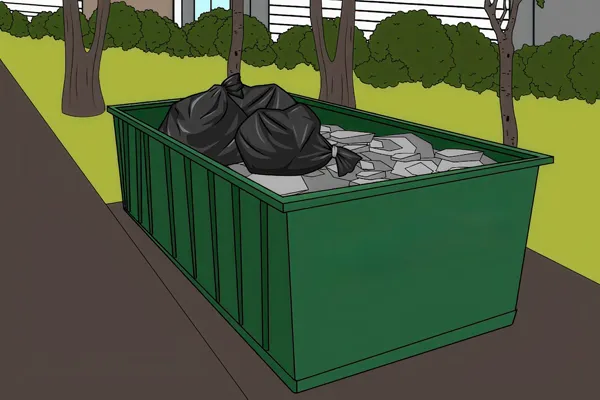
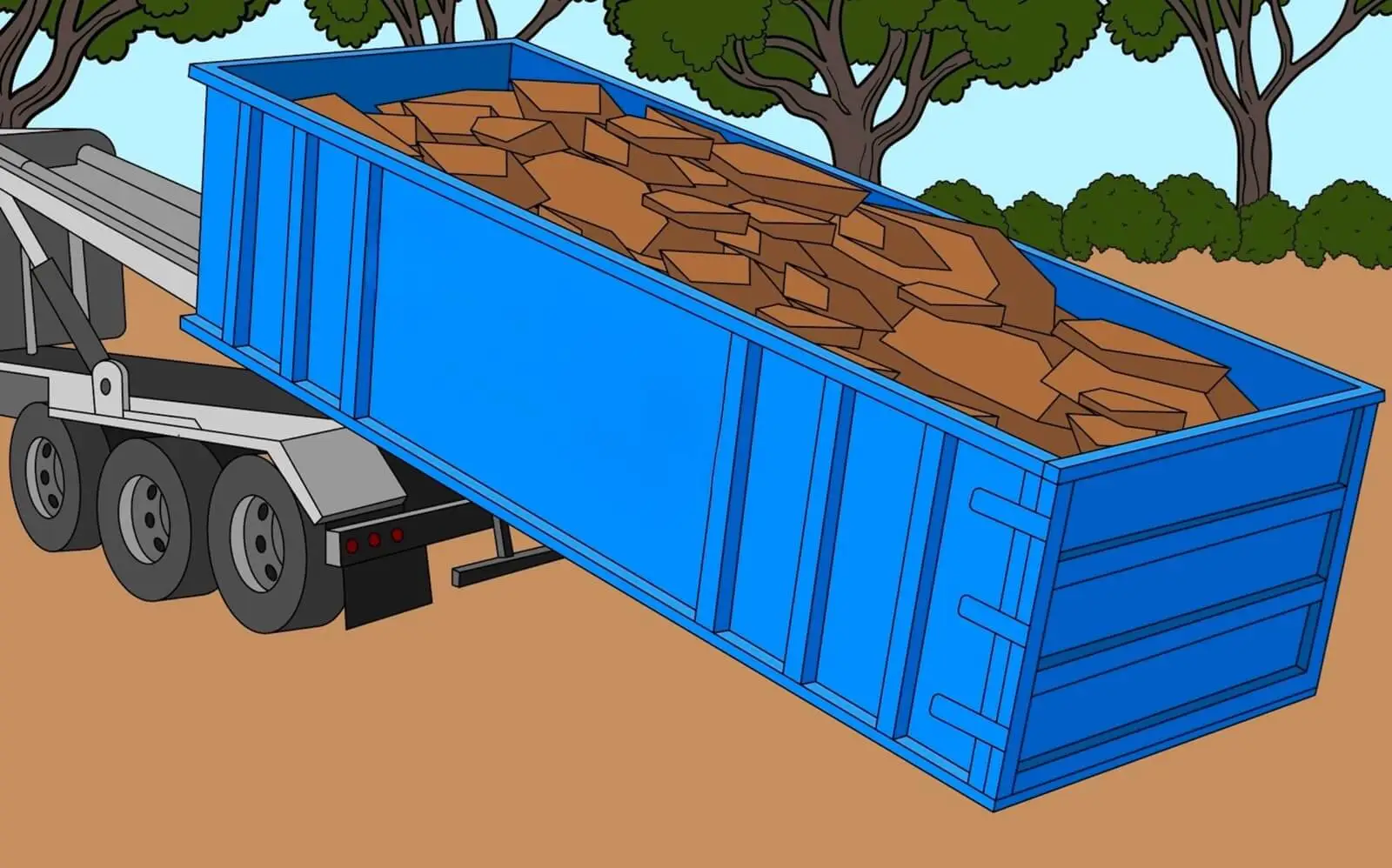
Most framing, drywall, stucco, flooring, roofing and household debris loads without trouble. The limits come from California's hazardous waste rules and from what the receiving station will take.
CalRecycle is blunt about it: putting hazardous waste in the garbage is illegal in California. That reaches paint of either kind, solvents and thinners, aerosol cans that are not empty, pesticides, pool chemicals, antifreeze, motor oil and filters, propane tanks and other compressed gas cylinders, fluorescent tubes and every kind of battery. Tires are barred from the trash too, to keep mosquitoes and tire fires out of landfills.
Two building materials catch people out on older Bell houses. Asbestos shows up in mid-century cement board, flooring and siding, and it has to be handled separately. Treated wood carrying chemical preservatives must be managed as hazardous waste rather than tossed. Electronics are their own rule: televisions, monitors, computers, printers and microwaves stay out.
The receiving transfer station takes only non-hazardous municipal solid and inert waste, and refuses hazardous and liquid waste at the gate. Ask your account manager about anything questionable before it goes over the rail.