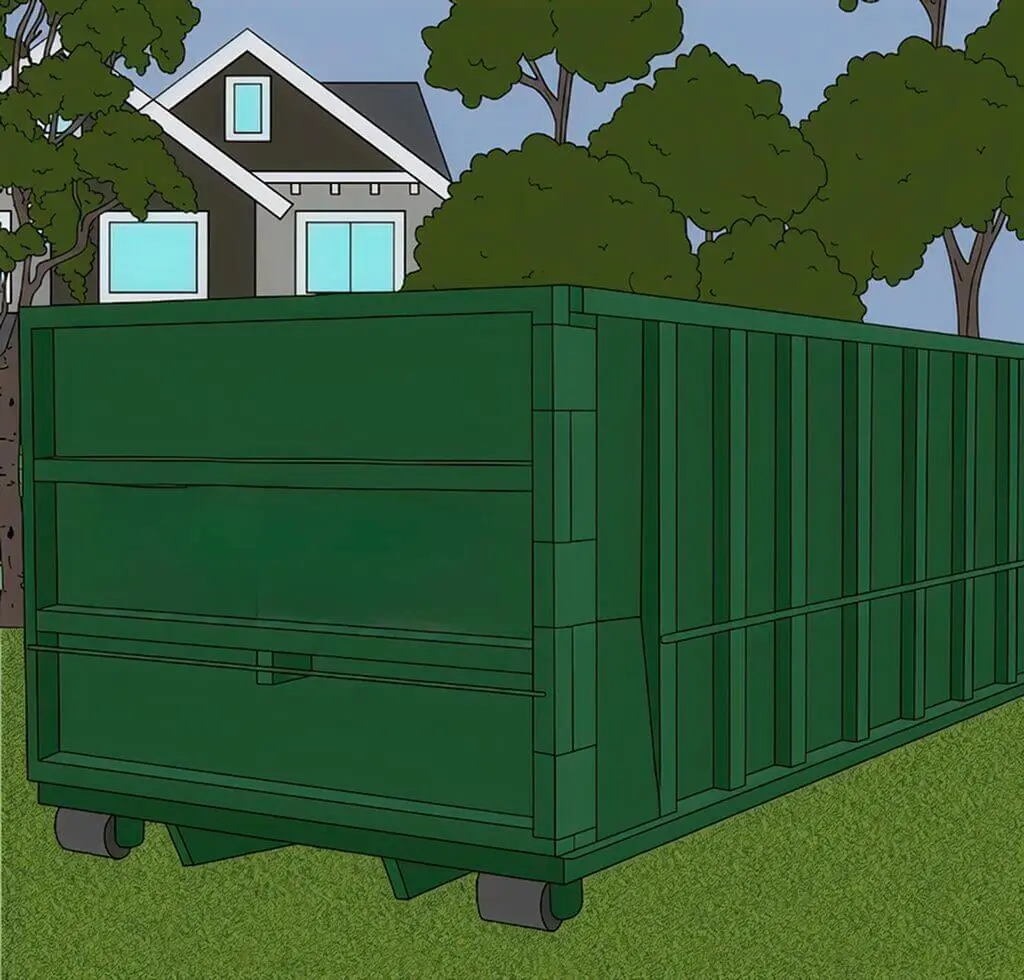
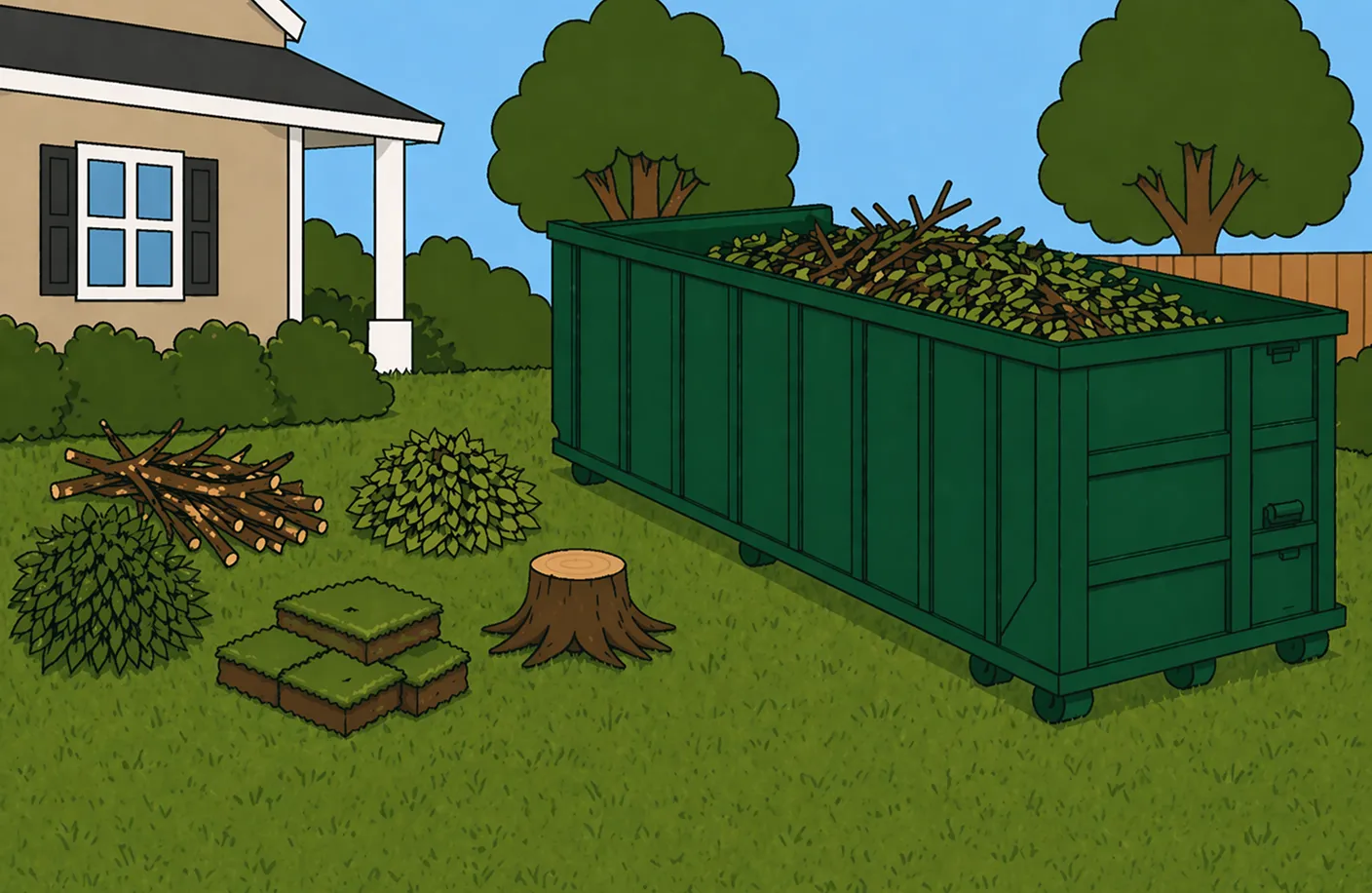
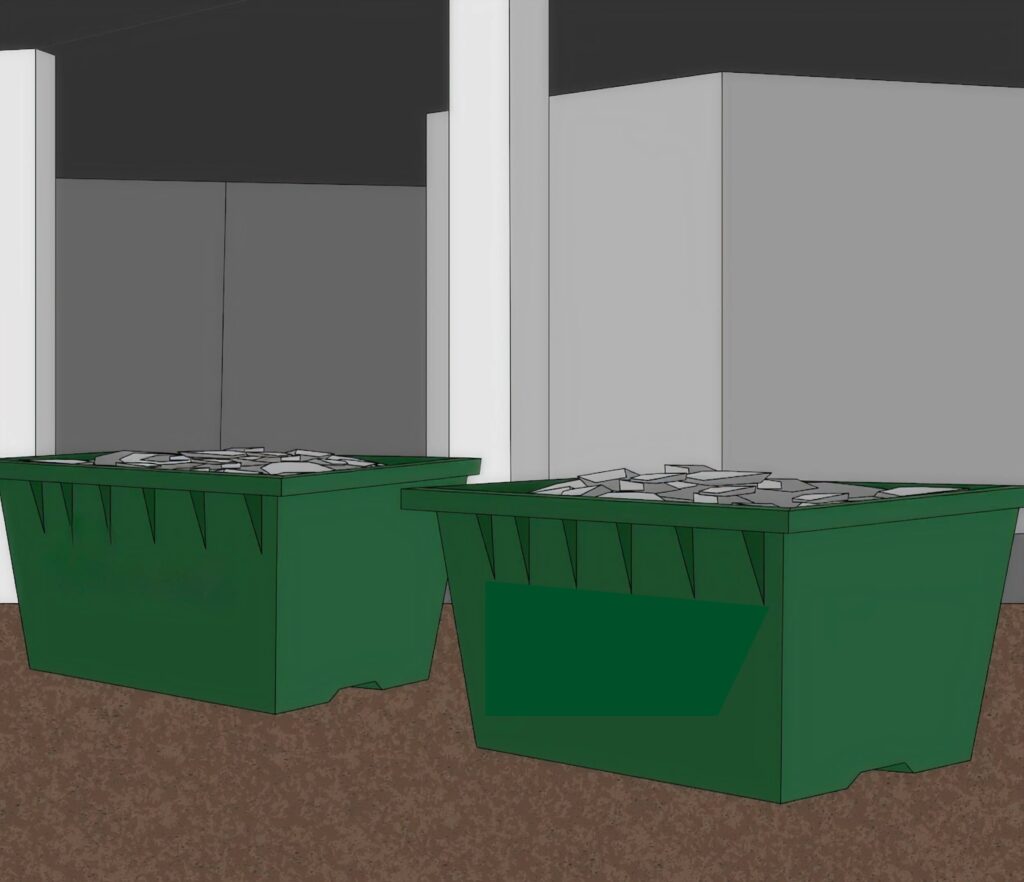
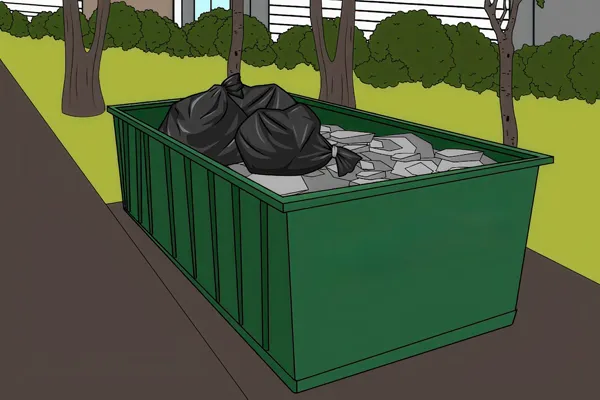
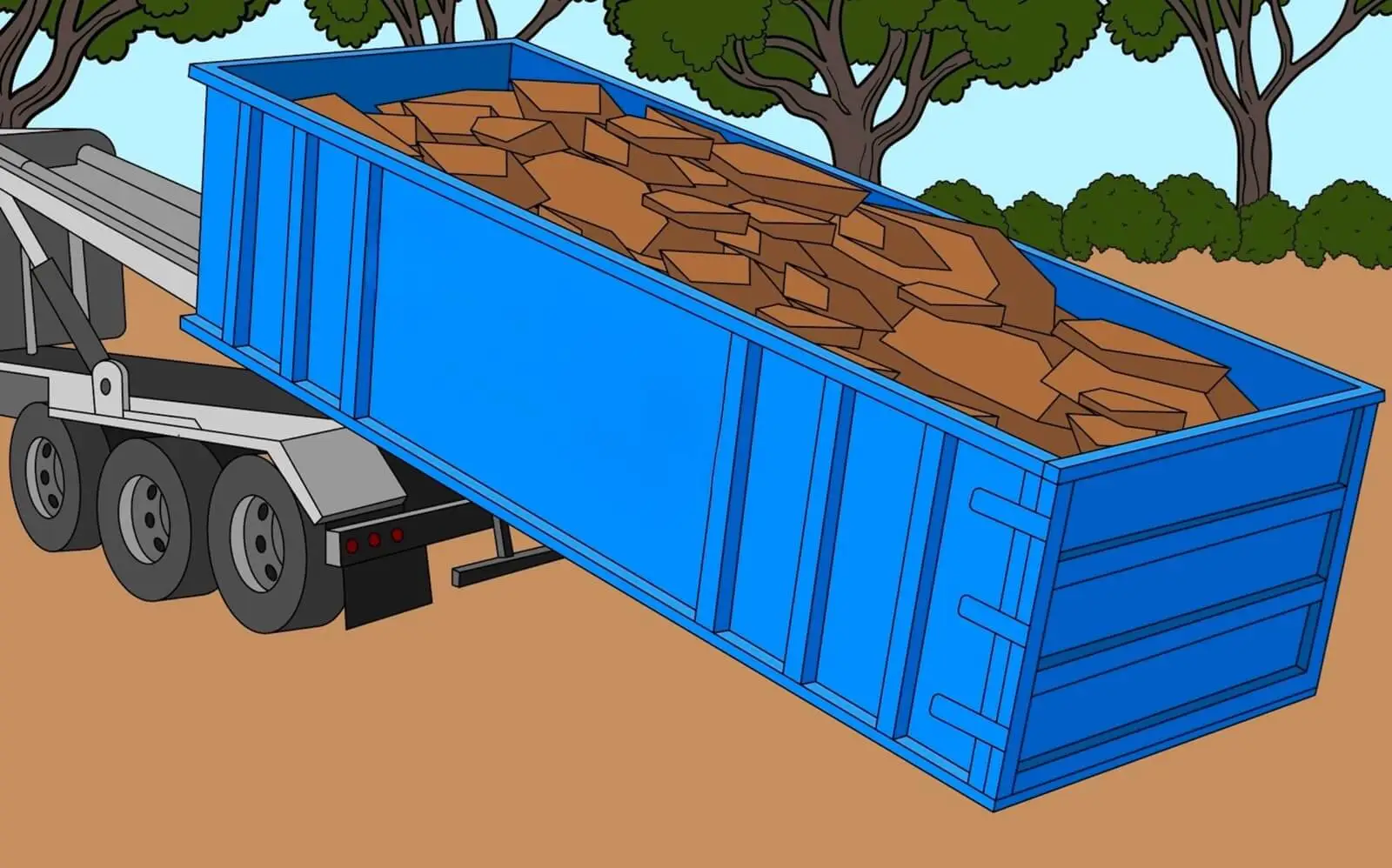
Standard remodel and demolition debris is fine: lumber, drywall, roofing, flooring, cabinets, doors, windows, fixtures, furniture and general cleanout material.
California treats a long list of ordinary household products as hazardous waste and bars them from the trash entirely. The state's own banned-from-the-trash list covers latex and oil-based paint, aerosol paint and solvent cans that are not empty, paint thinners and similar solvents, antifreeze, batteries, and motor oil and filters. Tires are banned too, not because they are hazardous but to prevent mosquito breeding and tire fires.
Two building materials on that list matter on almost every Olivehurst job. Asbestos turns up in older cement products, roofing, flooring and siding, and has to be assessed and abated separately. Treated wood carries chemical preservatives and is handled on its own route, which matters here because fence posts, deck framing and agricultural lumber are often treated.
Hazardous waste, liquids, paint, solvents and fuel are out of a standard container in every case, and so is anything from a vehicle or equipment fluid system.
If one item is the deciding factor, raise it with your account manager before you load. They can check it against the receiving landfill's own acceptance rules, which is what governs at the gate.