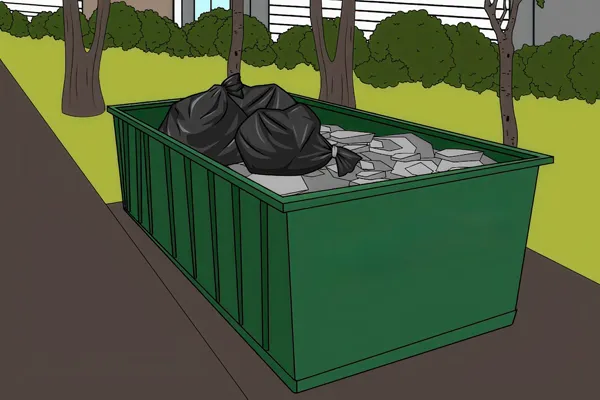
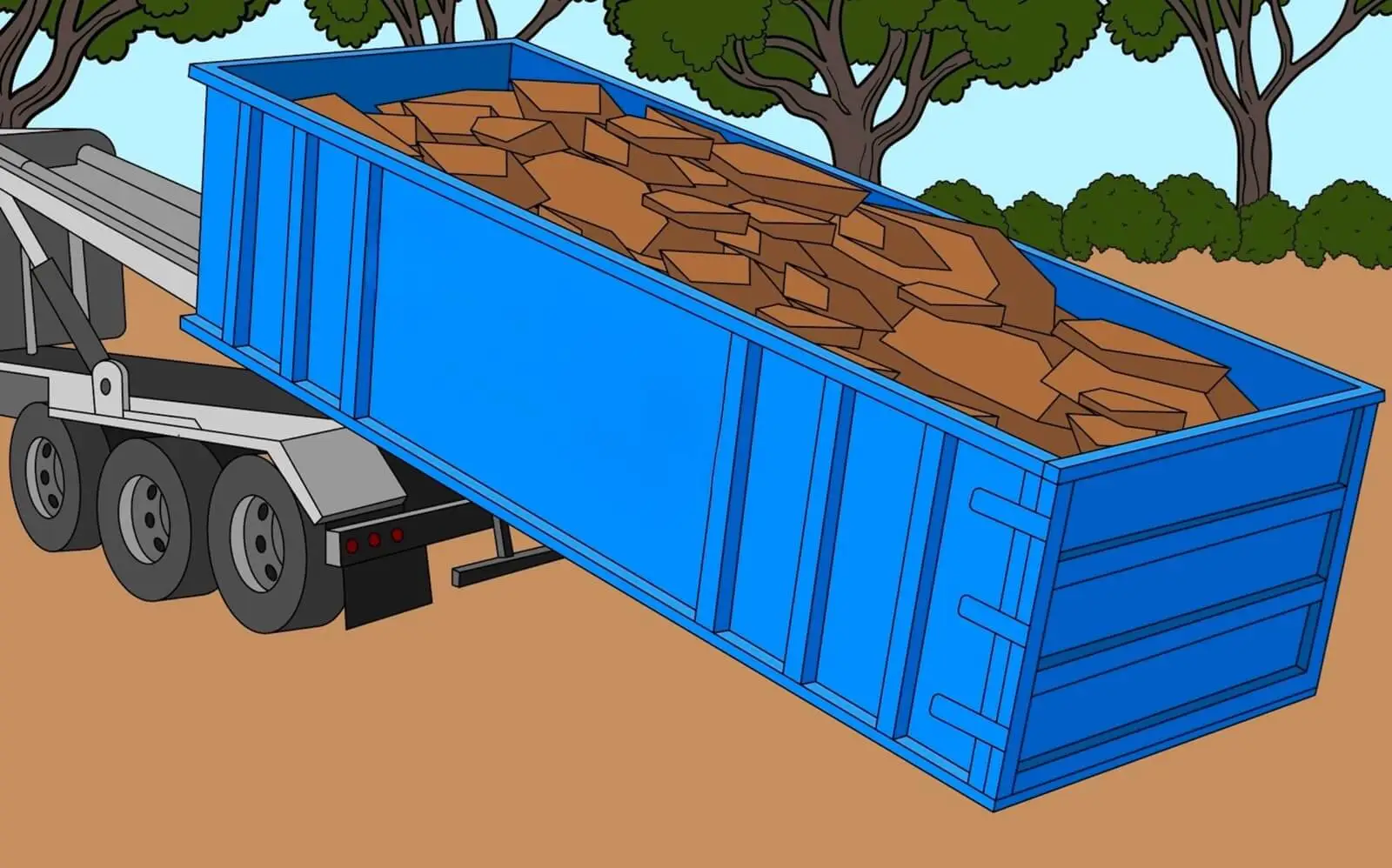
Framing, drywall, stucco, flooring, roofing, cabinets, doors, fixtures, furniture and ordinary cleanout debris are all normal Chino loads. The exclusions come from California hazardous waste law and from Chino's own code.
CalRecycle is clear that household hazardous waste cannot go in the trash anywhere in the state. Out of a Chino container, then: paint, thinners and solvents, part-full aerosol cans, pesticides, pool chemicals, antifreeze, used oil and filters, propane and other cylinders, fluorescent tubes, and every type of battery. Tires and electronics are statewide exclusions too.
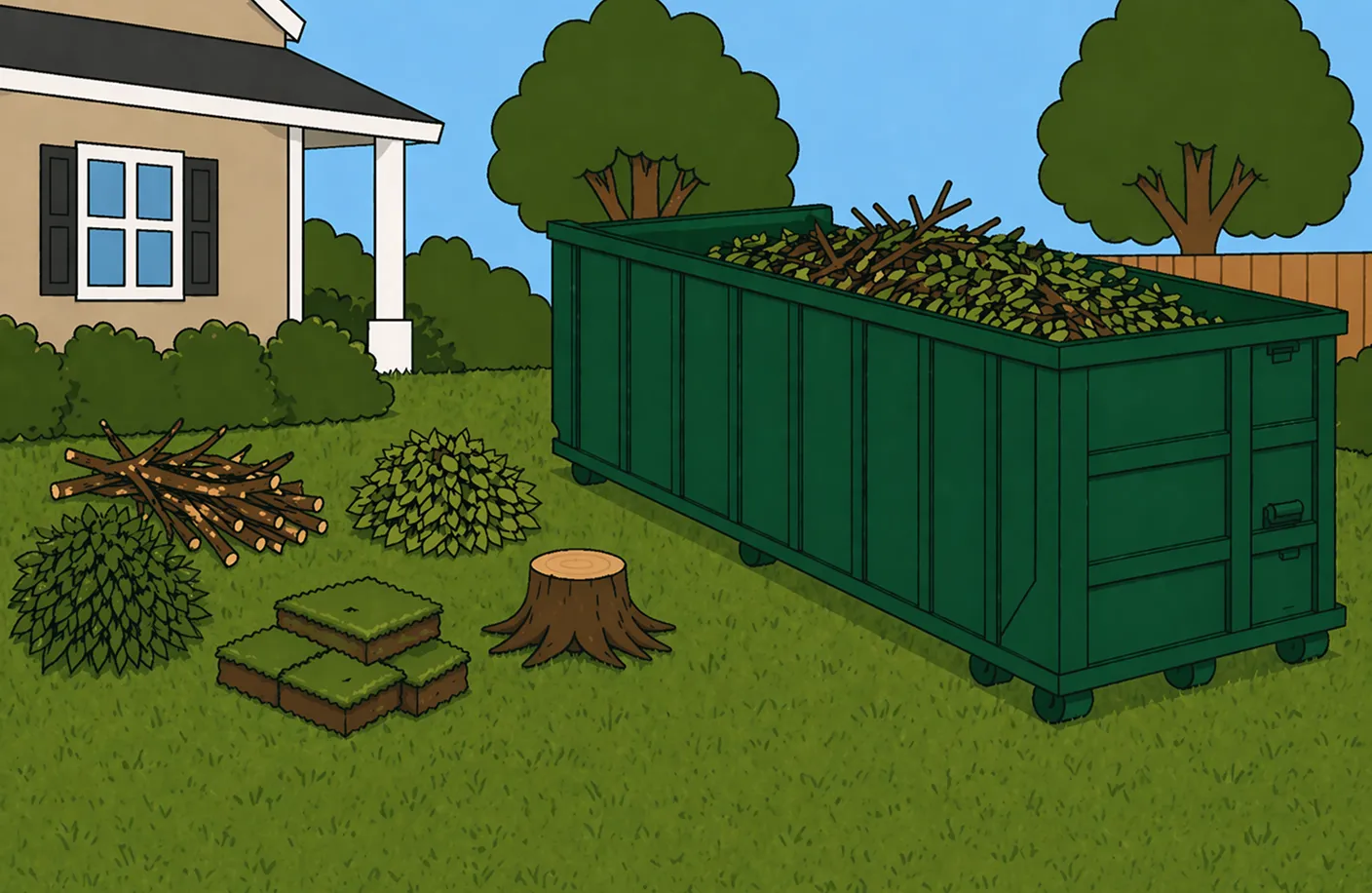
Chino's own rules add to that. The code writes asbestos, auto bodies, tires and sewage sludge out of its definition of solid waste altogether, and its collection prohibitions name ammunition, explosives, industrial waste, chemicals, acids, medicines and anything too large for collection equipment or likely to damage it, including large pieces of metal, machine parts, logs and tree stumps.
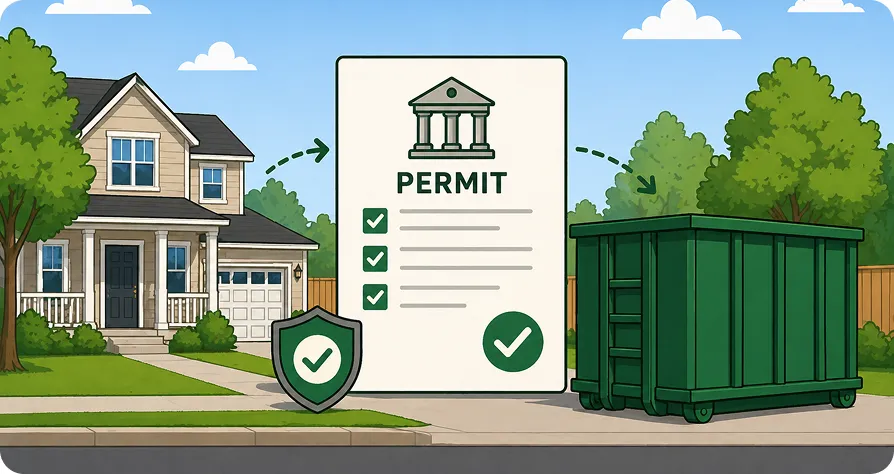
There is also a diversion duty that reaches your building permit. Anyone applying to the City for a permit for new construction or for additions and alterations has to comply with the state green building code and with the City's own rules on the collection, recycling, diversion, tracking and reporting of construction and demolition debris. That makes what happens to your debris part of the permit file rather than an afterthought.
Pull the hazardous items, the stumps and the tires before loading rather than after. One refused item can turn a whole container back at the gate, and your account manager can say where each of them goes.