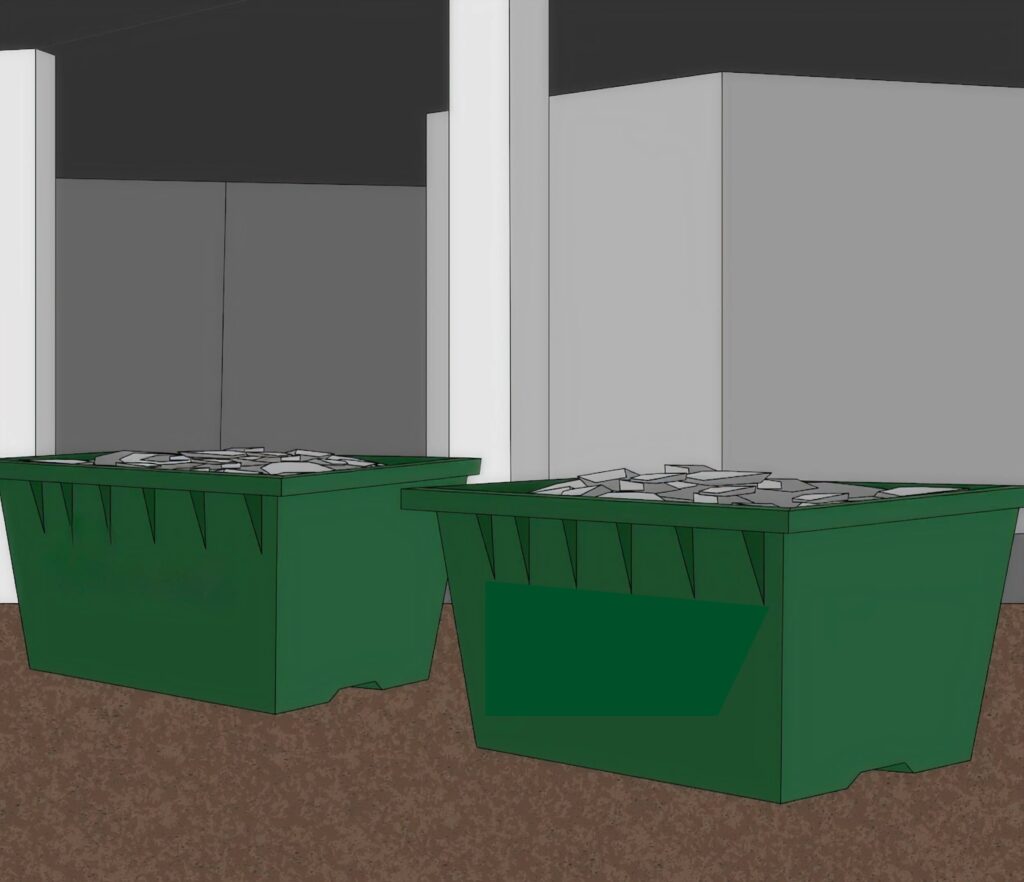
Everyday renovation and cleanout debris is fine: lumber, drywall, stucco, plaster, flooring, roofing, tile, cabinets, doors, furniture, carpet and cardboard all load without trouble, and clean concrete and brick go in the smallest size.
What stays out is what the city classes as special waste, and the list is broad: flammable waste, liquid waste, sewage sludge, manure, radioactive and explosive substances, asbestos, pesticides, herbicides, fungicides, rodenticides and other hazardous materials. The county landfills do not accept hazardous waste either, so there is no route for any of it through a container.
Tires are treated separately as bulky waste rather than as ordinary debris, so flag them in advance rather than putting them in. The city also sets outer limits on oversized yard material, taking tree trunks and large branches only up to two feet across and four feet long, and excluding car bodies, camper shells, trailers and spas altogether.
Burning is not an alternative. The code bars burning solid waste anywhere in the city except in an approved device permitted by the building official.
If an item is borderline, say a half-full tin of thinner, a sealed drum or an old television, run it past your account manager before it goes in the container.