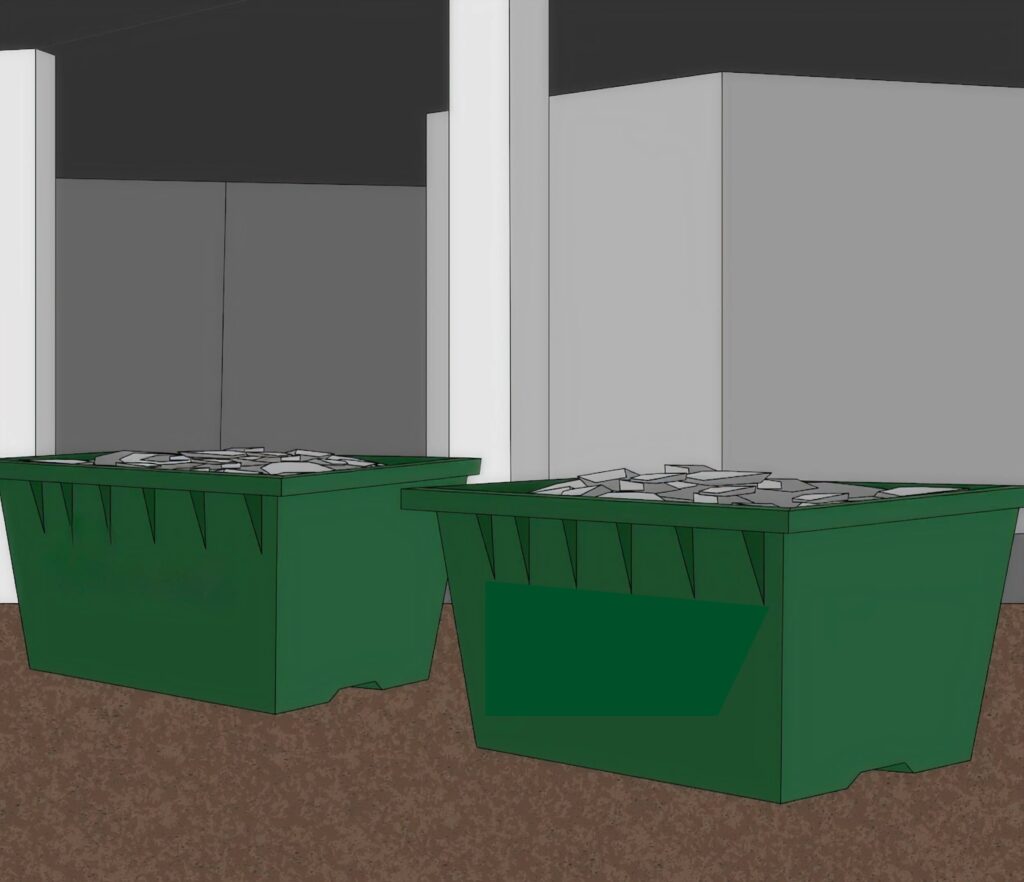
Everyday building and household debris loads without fuss: framing, drywall, roofing, flooring, cabinets, doors, carpet, furniture and packaging.
Hazardous material is excluded everywhere in California. Liquids, fuels, solvents, oil-based paint, pesticides, pool chemicals, asbestos and pressurized cylinders all stay out of a container, whatever the destination. California also bans a long list of household items from the trash. Batteries, fluorescent tubes and lamps, electronics, thermostats and anything with mercury in it all go through a household hazardous waste route instead.
Asbestos needs care on a South San Francisco job. Much of the housing, and a good deal of the older industrial fabric, dates from the 1940s to the 1960s. Asbestos was common then in floor tile, pipe insulation, roofing felt and siding. A survey before demolition is the sensible order of work, and an abatement contractor takes the material away separately.
California also treats recyclable material separately from mixed waste. On a demolition job that can be worth money as well as compliance. A clean container of just concrete, or just metal, or just wood, often costs less to tip than the same material mixed into a general load. Your account manager will tell you whether your material separates usefully.
Let your account manager know what is going in before the container reaches the site. Declaring an awkward item in advance costs nothing; a refused load costs a second haul.