
Mon - Sat 7:00 am to 7:00 pm
REQUEST A QUOTE
UNLOCK THE BEST DEALS FOR YOUR DUMPSTER AND PORTA POTTY RENTAL NEEDS!
Home Resources Dumpster Rental Resources Dumpster Rental Permits

Dumpster Permits: Everything You Need to Know
Getting the right permit before your dumpster is delivered keeps your project on track, helps you avoid fines, and ensures your container placement meets local safety and traffic regulations. Knowing when dumpster permits are required, and how to obtain what you need, helps prevent unexpected delays and unwanted fines on an otherwise well-planned project.
Prime Dumpster has helped customers across the country navigate the permit process, and we’ve put together this complete guide to walk you through when a permit is required, when it isn’t, and exactly how to get one.
What to Know About Permits
Understanding the permit process helps prevent fines, project delays and unexpected headaches Whatever you’re looking for, you’ll find an answer in the resources pages below.
Dumpster Rental Permits Explained
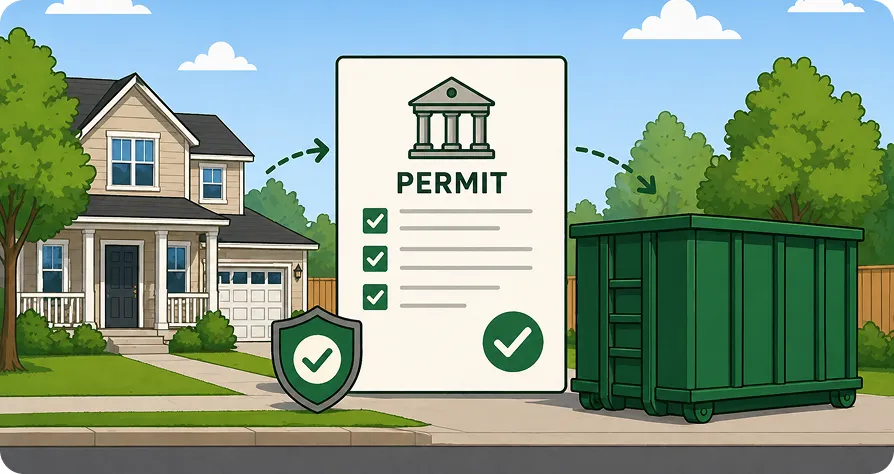
A dumpster permit is an official authorization issued by a local government or municipality that allows you to place a roll-off container in a designated location, most commonly on a public street, sidewalk, alley, or other right-of-way. Depending on your location, permits may be issued by a city’s public works department, engineering office, transportation authority, or building and zoning division.
These waste management permits exist to ensure that temporary dumpster placements don’t obstruct traffic, block emergency access routes, or create safety hazards for pedestrians and vehicles. Having the correct rented dumpster permit in place protects you from fines and project shutdowns, and in many municipalities it’s a legal requirement before a container can be delivered to a public space.
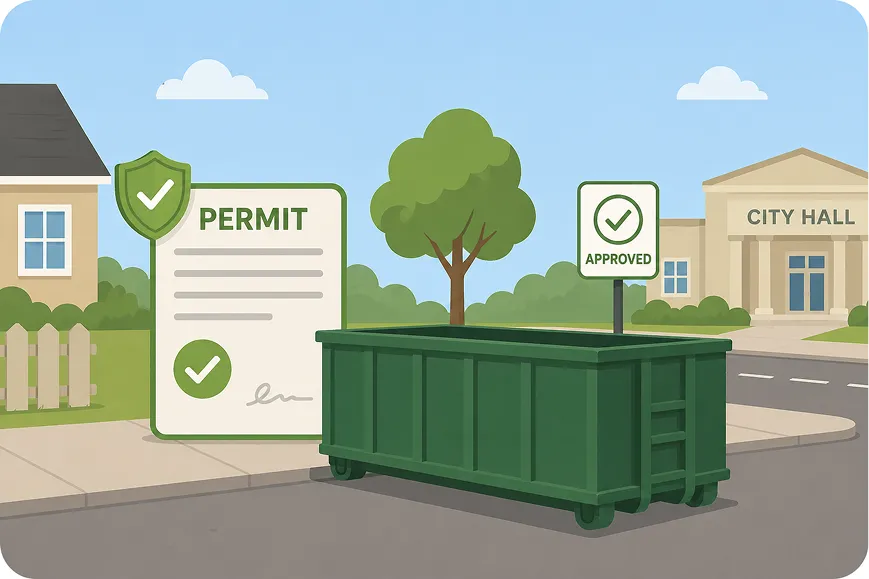
When Do You Need a Permit for a Dumpster?
A permit is typically required when your dumpster will be placed on public property rather than private land. If your container will occupy any portion of a public right-of-way, even temporarily during delivery or pickup, you’ll want to check with your local municipality before scheduling delivery.
The most common situations that require a permit for your rented dumpster include:
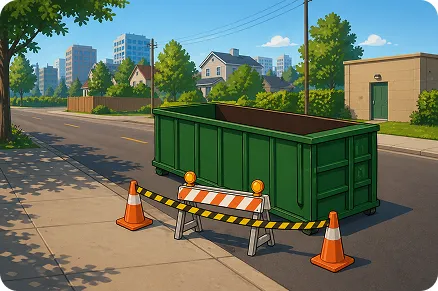
Public Street
Any dumpster occupying a public roadway, even partially
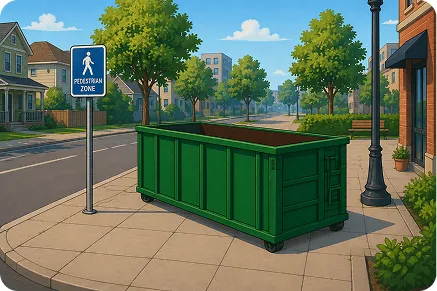
Sidewalk
Public walkways adjacent to streets or connected to public rights-of-way
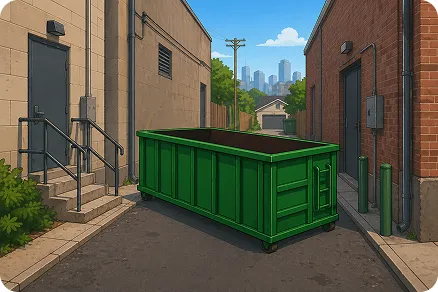
Alley
Any publicly accessible passages between buildings or around properties
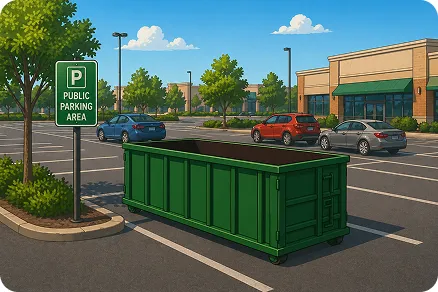
Public Parking Area
Parking lots open to the public or shared commercial spaces
When DON’T You Need a Dumpster Permit?
In most cases, you don’t need a permit if you’re placing the dumpster entirely on private property owned by yourself or your organization. Keeping a container on private land means you take responsibility for safe and accessible placement, but you can typically skip the permit process altogether.
Common locations that usually don’t require a permit for a dumpster include:
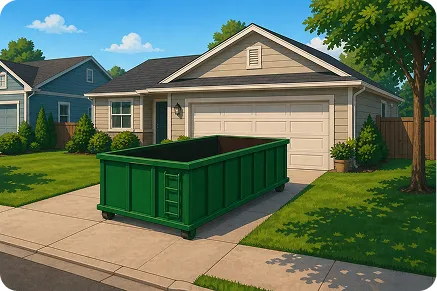
Home Driveway
Your personal driveway connected to your home or residential property
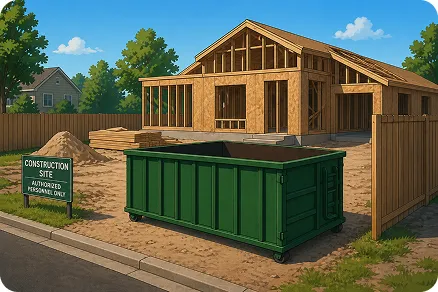
Construction Site
Active building sites located on private property with designated space for container placement
Private Parking Lot
Lots owned by businesses or individuals for private customer or employee use
Other Private Property
Any land you own or have explicit permission to use for the duration of your rental
Always Double-Check the Rules in Your Area
Local regulations can vary significantly from one city or county to the next, and some municipalities have requirements that go beyond the standard rules.
A few examples of unique dumpster rental rules and local regulations you may encounter include:
- Permits required for dumpsters placed on private property or residential driveways
- Approval from homeowners associations or similar organizations before a container can be delivered
- Outright prohibitions on dumpster placement in alleys due to size or access restrictions
Even when placing a dumpster on private property, it’s always a good idea to verify the specific rules in your area before scheduling delivery.
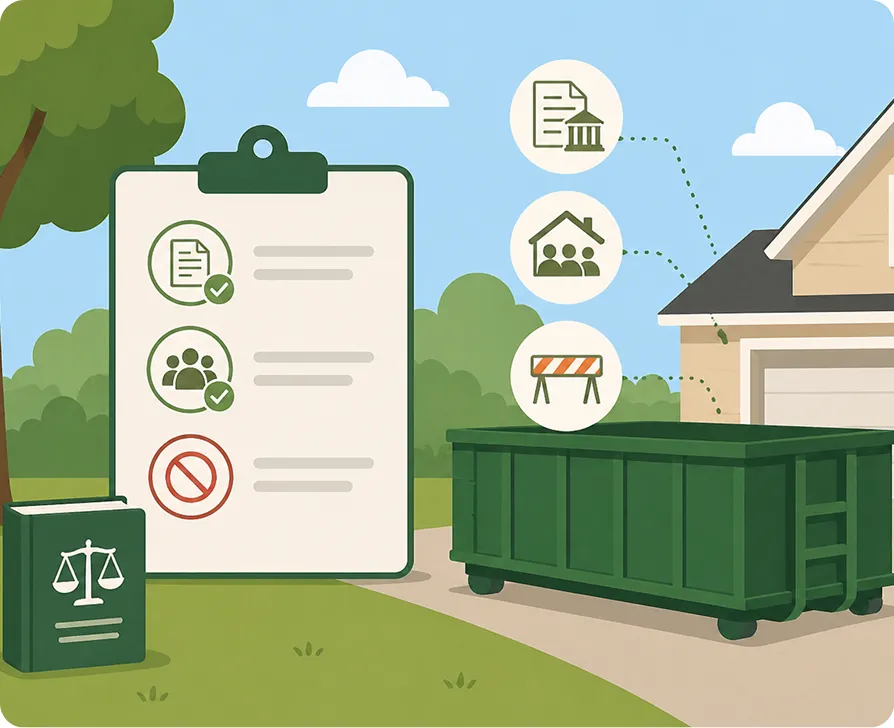
Not Sure If You Need a Permit? We Can Help!
Permits and regulations can be confusing, but our team is ready to assist. Send us a message or call us for help with dumpster permitting in your area.
How to Obtain a Permit for Your Roll-Off Dumpster
There’s no single, uniform way for how to get a dumpster permit. Instead, the dumpster permit application process varies by location. But in most municipalities, it comes down to four steps.
Starting early is the most important thing. Permit processing times vary widely, and delays can push back your delivery date.
Step 1
Find the Right Permit Portal or Department
Many cities offer permit applications through an official online portal. Search your city or county’s website for dumpster or right-of-way permits. If an online option isn’t available, a direct call to your local public works, engineering, or transportation department will often point you to the correct application process and any location-specific requirements.
Step 2
Submit Your Application
Most applications require your contact information, property address, dumpster dimensions, proposed placement location, and rental duration. Some municipalities also ask for the purpose of the rental (typically renovation, cleanout, construction) and contractor information if applicable. In some cases, a simple diagram showing the container’s position relative to the street or property line may be required.
Step 3
Receive Your Permit and Display It On-Site
Once approved, you’ll receive a permit document that must typically be kept on-site or displayed visibly at the placement location for the duration of your rental. Some permits include specific conditions, such as the use of reflective markings, traffic cones, or distance requirements from fire hydrants and crosswalks.
Step 4
Prepare Your Placement Location
Before delivery day, make sure the placement area meets the requirements outlined in your permit. Clear the space of vehicles, debris, and obstructions, and ensure the surface is stable and hard enough to support a fully loaded container. Confirm overhead clearance for utility lines and tree branches, and verify that the delivery truck has at least 50 feet of straight, flat access to roll off the container safely.
Many cities offer permit applications through an official online portal. Search your city or county’s website for dumpster or right-of-way permits. If an online option isn’t available, a direct call to your local public works, engineering, or transportation department will often point you to the correct application process and any location-specific requirements.
Most applications require your contact information, property address, dumpster dimensions, proposed placement location, and rental duration. Some municipalities also ask for the purpose of the rental (typically renovation, cleanout, construction) and contractor information if applicable. In some cases, a simple diagram showing the container’s position relative to the street or property line may be required.
Once approved, you’ll receive a permit document that must typically be kept on-site or displayed visibly at the placement location for the duration of your rental. Some permits include specific conditions, such as the use of reflective markings, traffic cones, or distance requirements from fire hydrants and crosswalks.
Before delivery day, make sure the placement area meets the requirements outlined in your permit. Clear the space of vehicles, debris, and obstructions, and ensure the surface is stable and hard enough to support a fully loaded container. Confirm overhead clearance for utility lines and tree branches, and verify that the delivery truck has at least 50 feet of straight, flat access to roll off the container safely.
Can Prime Dumpster Help Me Get a Dumpster Permit?
While regulations on permit ownership vary by location, our team will handle as much permit coordination as possible, and we’re ready to help you through every step of the process. If that’s the case, we can work with you and the hauler to determine the best course of action.
Please reach out as early as possible (at least five business days is ideal) to allow enough time to secure the dumpster rental permit before your dumpster arrives.
“The permit process is straightforward in most cases, but a little preparation goes a long way,” says the Prime Dumpster Pro. “The projects that run into delays are almost always the ones where the permit was an afterthought rather than part of the original plan.”
Dumpster Permit Questions?
Our Prime Dumpster Pros are ready to help
Dumpster Permit Tips and Tricks from the Prime Dumpster Pros
- Check for Placement and Safety Requirements – Your permit approval may come with specific conditions attached, such as requirements for reflective tape, traffic cones, or protective covers on dumpsters placed in public spaces. Some municipalities also require minimum distances from fire hydrants, crosswalks, and driveways.
- Check With Your HOA Before Booking – HOAs can have their own rules around rental duration, screening requirements, and acceptable delivery hours that operate independently of municipal permit requirements.
- Be Aware That Permit Denials Can Happen – Rented dumpster permit denials can occur for reasons such as road work, planned public events, seasonal restrictions, load limitations on certain roads, or an existing permit covering the same location. If your permit is denied, contact our team, and we’ll help you figure out your options.
- Multiple Permits – Sometimes you might need more than one permit. For example, a dumpster permit for the container itself and a separate right-of-way permit for street placement.
- Understand Time Limits – Dumpster permits are typically issued for only a specific number of days. While most municipalities allow renewals, you’ll need to request the extension as soon as you anticipate a delay, and you’ll likely pay additional fees.
If you run into any issues while obtaining a dumpster permit, or have any questions about what you need, reach out to Prime Dumpster for custom help.
Dumpster Rentals Near Me

Dumpster Rental Arlington, Texas 76010
Dumpster Permits FAQ
It depends on where you plan to place it. Dumpsters on private property typically don’t require a permit, but placement on a public street, sidewalk, or right-of-way almost always does.
In most cases, no. However, some municipalities and HOAs do require permits or approval for dumpsters placed on residential driveways, so it’s worth confirming with your local government before delivery.
Yes, in nearly all municipalities. Street placement requires a permit because the container temporarily occupies public right-of-way and must meet local safety and traffic regulations.
Dumpster rental permit fees vary widely by location, typically ranging from $20 to several hundred dollars depending on your municipality and the duration of placement.
Most permits limit street placement to a set number of days, commonly between three and fourteen days. Check with your local permit office for the specific duration allowed in your area.
There is no universal limit for dumpsters on private property, but some municipalities and HOAs impose time restrictions. Confirming local rules before your rental begins helps avoid any compliance issues.
Permit denials are uncommon but do happen due to road work, planned events, or existing permits in the same location. Contact Prime Dumpster and we’ll help you identify a compliant alternative placement option.
Prime Dumpster is Your Dumpster Rental Partner
From sizing and pricing to placement and permits, Prime Dumpster is ready to help with every aspect of your dumpster rental. Contact our team for personalized guidance on dumpster permits and other support to get your project off on the right foot.
Additional Dumpster Resources
Dumpster Rental Resources
Find everything you need for your dumpster rental, from sizing and pricing to permits.
Guide to Dumpster Pricing
Our guide includes updated price ranges, cost factors, and ways to save.
Dumpster Calculators
Estimating the weight of your debris helps you save money and time when renting dumpsters.
Give us a call today so we can help you find the right waste & sanitation solution for your project!